Teflon
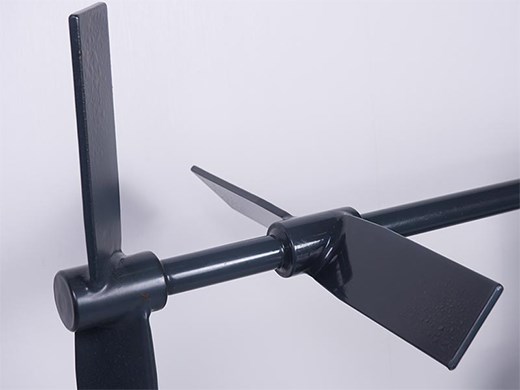
Teflon surface treatment, also known as polytetrafluoroethylene (PTFE) surface treatment, is a high-performance coating technology that enhances the properties of various surfaces. This treatment utilizes Teflon’s low friction, corrosion resistance, and anti-adhesive qualities to significantly improve wear and chemical resistance.
Key Benefits and Applications
- Low Friction: Teflon coatings reduce friction, which minimizes wear and extends the lifespan of mechanical parts. This is particularly beneficial in applications involving moving components.
- Chemical Resistance: Teflon is highly resistant to a wide range of chemicals, making it ideal for use in environments where equipment is exposed to corrosive substances.
- Ease of Cleaning: The extremely low surface energy of Teflon makes surfaces easy to clean, which is advantageous in food processing and cooking applications.
- Versatile Applications: Common uses include:
- Cookware: Non-stick properties make it suitable for pots and pans.
- Mechanical Components: Enhances performance in bearings and other moving parts.
- Electronics: Provides insulation and protection for electronic components.
In summary, Teflon surface treatment not only improves performance by reducing friction and enhancing durability but also simplifies maintenance, making it an excellent choice for various industrial applications.
Teflon surface treatment is widely applied across various industries, with its primary advantages including high-temperature resistance, corrosion resistance, and low friction. Below are some common application areas:
These applications fully utilize the properties of Teflon, enhancing the performance and durability of the products.
Various materials with Teflon (PTFE) surface treatment to enhance their performance. Below are common materials and their applications:
These applications fully utilize the properties of Teflon, improving the performance and lifespan of various equipment and components.
Teflon (PTFE) surface treatment is widely applied to products that require high-performance wear and corrosion resistance, especially in cases where CNC machining is needed after the process. Below are some key application examples:
- Mechanical Parts
- Valves and Pumps
- Electronic Components
- Chemical Processing Equipment
- Medical Devices
These applications make full use of Teflon’s low friction, chemical resistance, and high-temperature stability, particularly after CNC machining, to further improve the performance and durability of the products.
The manufacturing methods of Teflon (PTFE) can be tailored according to application needs and product shapes. Below are some common types of manufacturing methods:
1. Electrostatic Spraying
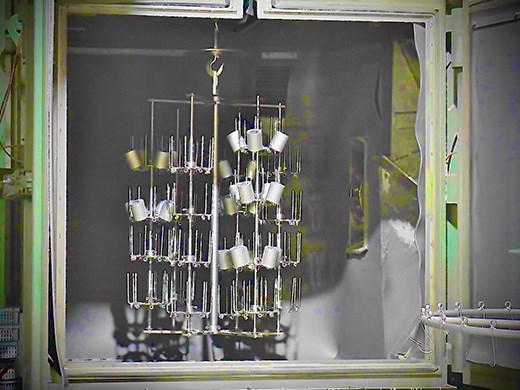
- Process: Teflon powder is charged and then electrostatically attracted to the surface to be treated, followed by heating to melt and adhere it. This method can uniformly cover complex shapes.
- Applications: Widely used for metal components, such as mechanical parts and tools.
2. Dip Coating
- Process: The substrate is dipped into a Teflon solution, then heated to dry and cure. This method is suitable for parts requiring thick coatings.
- Applications: Commonly used in chemical processing equipment and container linings.
3. Spraying
- Process: A spray gun is used to apply Teflon coating to the surface, followed by heating for curing. This method is suitable for flat or curved surfaces requiring uniform coatings.
- Applications: Used for electronic components, mechanical parts, and more.
4. Electroplating
- Process: The substrate is immersed in a Teflon electroplating solution, where the coating adheres to the surface through an electrochemical reaction. This method forms a wear-resistant coating on metal surfaces.
- Applications: Suitable for high-performance mechanical parts and tools.
5. Brush Coating
- Process: Teflon coating is manually applied to the substrate surface using a brush, followed by heating for curing. This method is typically used for small batches or repair work.
- Applications: Used for components and equipment with special requirements.
6. Film Lamination
- Process: A Teflon film is applied to the substrate surface and then heat-pressed for curing. This method is ideal for flat surfaces requiring high wear resistance.
- Applications: Used for surface treatment of electronic products and industrial equipment.
These manufacturing methods can be selected based on the shape, performance requirements, and application environment of the product to achieve the best surface treatment results.