
High-precision cnc machining for electronic devices

Precision Metal Fabrication: The Foundation of High-Performance Technology
Precision Metal Fabrication: The Foundation of High-Performance Technology. Our commitment to Uncompromising Manufacturing for Server, AI, and Industrial Systems is absolute.
In the race for computational power, the reliability of high-end electronics demands the highest standard of physical infrastructure. We specialize in advanced Precision CNC Machining, Precision Die Casting, and Precision Stamping to deliver mission-critical metal components.
Our integrated expertise provides essential Server Chassis, AI Server Metal Fabrication, and high-efficiency thermal solutions like Cold Plates and Server Heat Sink Metal Parts. This precision extends to durable Industrial Electronic Enclosures and stable Camera Module Components.
As a CNC precision parts manufacturer for Industrial Optical Lenses ,we ensure every part is engineered for absolute thermal and structural integrity. To see the application in electronic devices:
How does precision CNC machining function as the core of applications in optical and imaging devices?
In the field of optical imaging, the demand for precision often surpasses that of structural components, as even minute deviations can cause image distortion. Precision CNC Machining is the only method capable of ensuring the absolute accuracy of the optical path.
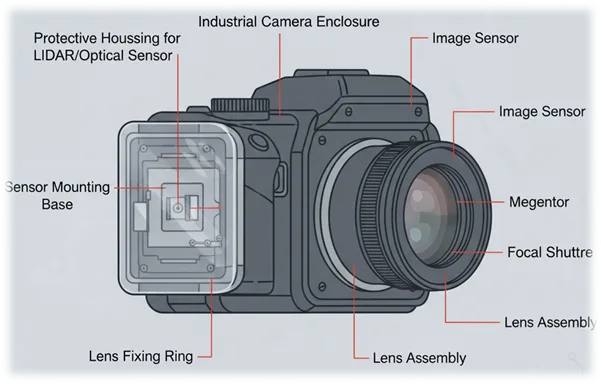
Industrial Optics CNC Machining Specialist CTT®
Camera Housings
Durability Meets Lightweight Design through Precision CNC Machining
- Focus: SLR, Industrial, and High-End Video Camera Bodies.
- CNC Benefit:
- Lightweighting: Internal milling for weight reduction (maintaining strength).
- Sealing: Precision O-ring grooves (e.g., IP67 dust/water resistance).
- Thermal: Metal shell acts as heatsink interface.
Dash Cam Enclosures
Robustness in the Automotive Environment via Precision CNC Machining
- Focus: High-end ADAS/Dashcam main unit enclosures.
- CNC Benefit: Automotive Resilience.
- Heat Sink: Efficient aluminum alloy cooling (prevents overheating/failure).
- Robustness: Withstands continuous vibration and shock.
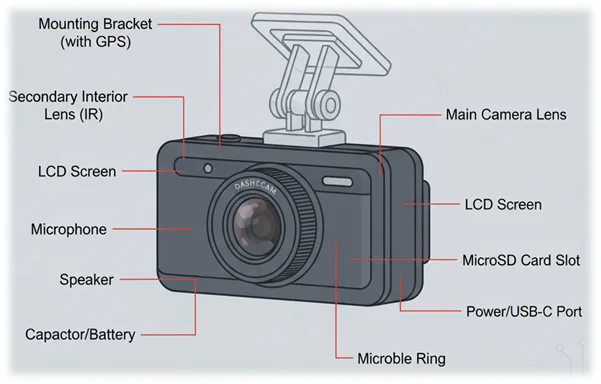
Industrial Optics CNC Machining Specialist CTT®

Industrial Optics CNC Machining Specialist CTT®
Lens Mounting Modules
Precision CNC Machining as the Foundation of Optical Precision
- Focus: Lens mounts (C-Mount, F-Mount), barrels, and aperture mechanisms.
- CNC Benefit: Optical Foundation.
- FFD Control: Micrometer-level tolerance for Flange Focal Distance (FFD), ensuring infinity focus.
- Parallelism: Absolute alignment between mount and sensor plane (eliminates aberration).
- Concentricity: Optical axis alignment with the mechanical axis.
What’s the Role of Precision CNC Machining in LED/IC Heatsink Fabrication and Optimized Anodizing
As the power density of electronic components continues to rise, thermal management for LED lighting and IC chips has become crucial for determining product performance and lifespan. The core of any high-efficiency cooling solution relies on the precise manufacturing processes used for the heatsinks themselves.
Precision CNC Machining (Computer Numerical Control) plays a central role in this process. Compared to traditional methods like die casting or extrusion, CNC cutting can fabricate complex thermal geometries—such as thin, dense fins, micro-channels, or intricate internal features—with extremely high accuracy and tight tolerances (e.g., $pm 0.05$ mm). This capability is vital for maximizing the heat dissipation surface area and optimizing the airflow path, significantly boosting heat transfer efficiency.
The Advantages of Precision Machining Include:

Surface Flatness
- High precision
- Minimize gaps
- Reduce resistance

Design Freedom
- Multi-material
- Complex shape
- Customization

Optimized Anodizing
- Resist corrosion
- Boost emissivity
- Better cooling
Meeting High-Performance Computing Demands:
Key Supply Chain Needs for Servers and Cooling, Centered on Precision CNC Machining
The rapid evolution of technologies like Artificial Intelligence (AI) and High-Performance Computing (HPC) continually elevates the performance requirements for server systems, consequently driving immense demand for specific components and advanced manufacturing techniques across the supply chain. This article focuses on three core areas—server structural components, advanced cooling elements, and essential processing materials—analyzing key market search criteria and emphasizing the pivotal role of precision CNC machining.
Server Structural Component Upgrades and Sourcing: Synergy with Precision CNC Machining
The AI era demands stringent standards for server structural components and AI server rack systems. Industry focus is on suppliers providing high-density solutions.Demand for Precision Stamping OEM (chassis/brackets) is high. Precision CNC Machining is essential for prototyping, design adjustments, and tooling for these structural parts.
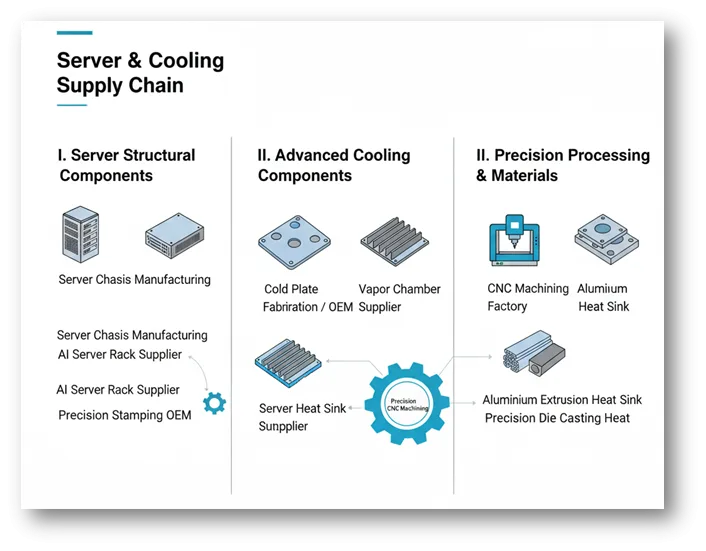
Technological Innovation in Advanced Cooling Components: Precision CNC Machining Empowers Liquid Cooling Modules
Thermal management is critical. Liquid cooling adoption drives high demand for Cold Plate Fabrication / OEM services.Precision CNC Machining is vital for the complex internal channels of cold plates, ensuring micro-flow passage accuracy and sealing.To counter extreme heat, the need for Vapor Chamber Suppliers has surged. Stable sourcing of Server Heat Sink Metal Parts is also key to thermal performance.
Technical Support in Precision Processing and Materials: The Core Role of Precision CNC Machining
Success relies on advanced processing. Partnering with CNC Machining Factories for high-accuracy CNC processing of cold plates and precision brackets is a fundamental industry requirement.Aluminum Extrusion Heat Sinks serve mid-to-low-end cooling. For complex structures, Precision Die Casting Heat partners are sought for intricate aluminum alloy components
How To Unlock Cost Savings with Modular Design and DFM
Design and DFM
Our specialized service focuses on Design for Manufacturing (DFM) with a Modular Design approach, providing the critical insights needed to streamline your production line before mass production begins.
The Key Value Proposition for Procurement:
We work directly with your engineering teams to implement Modular Design DFM: Key Recommendations to Reduce Electronic Component Assembly Steps. This isn’t just a design review; it’s a strategic intervention aimed at optimizing the Bill of Materials (BOM) and assembly process. By adopting modular principles and applying rigorous DFM checks, we can:
- Reduce Assembly Steps by up to 30%: Simplifying the product structure, integrating multiple functions into single components, and minimizing the need for manual handling, screws, and fasteners. Fewer steps mean lower labor costs and faster throughput.
- Minimize Part Count and Inventory Risk: A modular approach consolidates parts, making your supply chain leaner, easier to manage, and less susceptible to single-component shortages.

3. Enhance Quality and Reduce Rework: Simplification inherently reduces the possibility of assembly errors, leading to higher first-pass yield and eliminating costly post-assembly rework and field failures.
Stop procuring complex, assembly-intensive designs. Leverage our DFM expertise to create products that are inherently cheaper and faster to build. Contact us today to schedule a DFM analysis and turn complexity into competitive
What to Look For When Selecting Precision CNC Machining Suppliers for Electronic Standards
For every procurement professional, securing reliable components is non-negotiable. The true indicator of a manufacturer’s commitment to quality isn’t just their price, but the rigor of their inspection and quality control framework. You must look beyond initial samples to their systematic approach to zero defects.
As a CNC precision machining supplier for industrial vision lens components, our quality assurance is built on a robust, multi-stage inspection process designed to guarantee precision and stability, crucial for complex parts like high-density connectors and heat dissipation metalwork.
We maintain superior yield rates through the use of advanced metrology equipment, including: Coordinate Measuring Machines (CMM), Video Measurement Systems, and Digital Height Gauges. These tools ensure every dimension, tolerance, and surface finish meets the most stringent specifications. Furthermore, our utilization of specialized systems like CDD (3D Digital) technology confirms the geometric integrity of parts with unparalleled accuracy.
By partnering with a manufacturer that prioritizes systematic verification over spot checks, you mitigate risk, reduce costly incoming material inspections, and ensure the consistent performance of your final product. Make inspection capability your primary metric for supplier selection.
Our commitment to Uncompromising Manufacturing for Server, AI, and Industrial Systems is absolute.
In the race for computational power, the reliability of high-end electronics demands the highest standard of physical infrastructure. We specialize in advanced Precision CNC Machining, Precision Die Casting, and Precision Stamping to deliver mission-critical metal components.
Our integrated expertise provides essential Server Chassis, AI Server Metal Fabrication, and high-efficiency thermal solutions like Cold Plates and Server Heat Sink Metal Parts. This precision extends to durable Industrial Electronic Enclosures and stable Camera Module Components.
We ensure every part is engineered for absolute thermal and structural integrity. Partner with us for unparalleled precision.
High-Precision CNC Machining for Industrial Lens Components


Aluminum Alloy Enclosures:
- Aluminum Alloy RF Shielding Enclosures
- Aluminum Alloy EMI Shielding Housings
- High Thermal Conductivity Aluminum Alloy Enclosures
- Aluminum Alloy Environmental Protection Enclosures
- Electromechanical Integrated Aluminum Alloy Housing
Product Mechanical Design:
- RF Component Mechanical Design
- High-frequency Structural Modules
- Dynamic Mechanical Structures for Communication Devices
- Composite Material Electromechanical Assemblies
- Mechanical Structures for Avionics Systems
Product Structural Design:
- RF Structural Framework
- High Stress Load-bearing Structures
- Thermal Management Structural Modules
- Support Structures for Communication Base Stations
- Precision Environmentally Adaptive Structures
Avionics:
- Avionics Modules
- Flight Control Systems
- Navigation and Positioning Modules
- High-Precision Inertial Measurement Units (IMUs)
- Airborne Electronics Housings
Microwave Communication:
- Microwave Power Amplifier Housings
- High-Frequency Transmission Modules
- RF Front-End Modules
- Microwave Filters
- Radar System Component Housings
Telecom Base Stations:
- Base Station Passive Antenna Structures
- RF Amplifier Enclosures
- Telecom Tower Equipment Support Structures
- Base Station Heat Sink Modules
5G Related Technologies:
- 5G RF Modules
- Millimeter-Wave Antenna Arrays
- 5G Base Station Heat Dissipation Enclosures
- Small Cell Base Station Enclosures
In electronic products, low-Earth orbit satellites, microwave communication systems, VAG automated guided vehicles (AGVs), and time-lapse dash cameras represent the cutting edge of today’s advanced technology. Low-Earth orbit satellites and microwave communication systems play a crucial role in satellite communications, providing global communication and positioning services, while also advancing scientific research and geographic information applications. VAG AGVs have revolutionized the logistics transportation sector, achieving automated and intelligent logistics management, improving logistics efficiency, and cost control. The time-lapse dash camera is a stylish and powerful electronic device that records high-definition video during driving, capturing beautiful scenery or documenting the driving process, while also providing important safety features like collision detection and evidence protection.
In optical-related aspects, the optical modules in these products, such as lenses and filters, play a key role in ensuring the accuracy and clarity of visual information. The application of these products brings efficiency gains and cost savings, significantly impacting modern society. In design and manufacturing, these products utilize various materials such as lightweight aluminum alloys and durable stainless steel to ensure their performance and reliability.
Common materials used in electronic products include:
These materials are selected and applied according to the specific requirements and applications of the products.
In the manufacturing of electronic components, CNC precision machining plays a crucial role, ensuring the precision and quality of various parts. In the production of low-Earth orbit satellites, CNC machining is used to manufacture components such as satellite bodies, solar panels, and communication antennas, ensuring their stability and reliability. Microwave communication manufacturing requires the production of high-frequency circuits, RF devices, and antennas, with CNC machining ensuring precision and the stability of microwave communication systems.
In the manufacturing of optical lens components, optical lenses, lens barrels, and other parts need CNC machining to ensure the performance and quality of the optical systems. Time-lapse photography manufacturing requires the production of camera bodies, mounts, lenses, and CNC precision machining ensures stability and quality. In the production of VAG automated guided vehicles (AGVs), the high-precision machining of components such as vehicle structures, tires, and electronic control systems ensures operational efficiency and stability. The manufacturing process of these parts is closely linked to CNC precision machining, ensuring the quality and performance of the products.
- CNC Lathe
- CNC Milling Machine
- Forging
- Aluminum Extrusion
- Stamping
- Plastic Injection
- Casting
- Rubber Molding
- Wire Forming
- Hot Pressing and Thermoforming
After the manufacturing of electronic components, surface treatment is crucial. Forged and cast metal parts need grinding and polishing to improve surface smoothness; CNC machined parts often undergo anodizing, electroplating, or coating to enhance corrosion resistance; plastic injection and rubber-molded parts require coating treatments to improve appearance and durability. Surface treatments not only enhance the functionality of parts but also improve the overall quality and aesthetic appeal of the products.
- Anodizing
- Sandblasting
- Vibration & PolishingElectrophoretic Deposition (Coating)
- Electroplating
- Laser Engraving
- PVD Teflon
- Chromate Conversion Coating
- Chemical Nickel / Chemical Black Nickel
- Trivalent Chromium / Hard Chromium
- Cold Plating / Low-Temperature Black Chromium
- Stainless Steel Passivation

Aerospace

RF & SATCOM

Medical

Drones&UAVs

Consumer electronics

Outdoor sports

Electronic

Bike

Transportation


