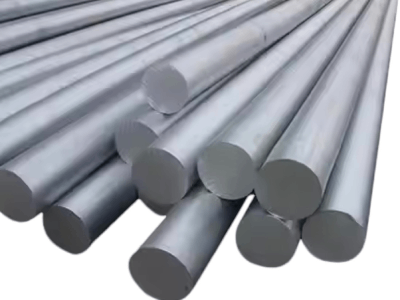
Titanium alloy
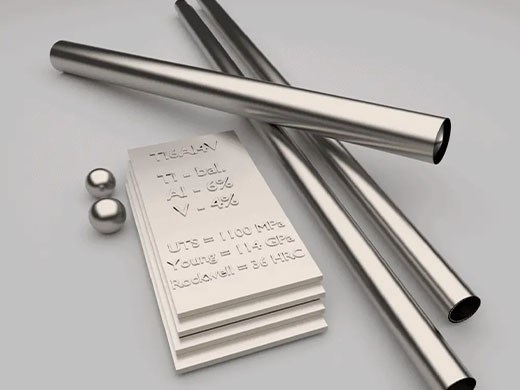
Titanium products are widely used in industrial fields due to their excellent strength-to-weight ratio, corrosion resistance, and high-temperature performance.
In the aerospace industry, their lightweight characteristics are utilized to manufacture aircraft and spacecraft components, enhancing fuel efficiency and payload capacity. In medical devices, titanium alloys are used to produce artificial joints and bone screws due to their excellent biocompatibility and durability. The oil and gas industry employs titanium alloy pipes and equipment to withstand corrosive environments, extending service life. Additionally, the automotive industry uses titanium products to produce high-performance components, reducing vehicle weight and improving performance and fuel economy.
The main characteristic of titanium alloys are as follows:
- High strength and lightweight
- Excellent corrosion resistance
- High heat resistance
- Good machinability and weldability
- Low thermal expansion coefficient
- Fatigue resistance and shock resistance
- Biocompatibility
- Low-temperature tolerance
Titanium alloys have a wide range of applications in metalworking and CNC machining. Below are some of the main product applications:
- Aerospace
- Medical
- Consumer electronics
- Outdoor Sports
- Automotive Industry
- Marine Industry
- Chemical Industry
- Energy Industry
CNC machining technology can precisely process titanium alloys, producing high-precision and high-quality components that meet the stringent performance and durability requirements of various industries.
Common types of titanium alloys are as follows:
- α Titanium Alloys: Offer better heat resistance and toughness.
- β Titanium Alloys: Provide higher strength and ductility.
- α+β Titanium Alloys: Combine the characteristics of both α and β titanium alloys, making them suitable for various engineering applications.
Based on different international standards and application requirements, titanium alloys can be classified into various grades, each with specific chemical compositions and mechanical properties. Common types include:
European Standards (EN):
- Ti-6Al-4V: The most common β-type titanium alloy, used in aerospace, medical implants, etc.
- Ti-6Al-2Sn-4Zr-2Mo: High-strength β-type titanium alloy, suitable for high-temperature structural components and engine parts.
- Ti-5Al-2.5Sn: Offers good corrosion resistance, used in marine industry and chemical equipment.
American Standards (AMS):
- AMS 4911: Pure titanium or pure titanium alloy sheets.
- AMS 4928: Suitable for aerospace and industrial applications.
Japanese Standards (JIS):
- JIS T-A1: General-purpose pure titanium material, used in chemical, electronic, etc.
- JIS T-A4: High-strength titanium alloy, used in aerospace and high-temperature applications.
Titanium alloys have a broad range of applications across various product areas, including:
- Aerospace: Used in manufacturing fuselages, engine components, wing structures, etc.
- Medical: Implants, artificial joints, surgical tools, etc.
- Chemical Equipment: Corrosion-resistant containers, pipelines, etc.
- Automotive Industry: High-performance automotive parts.
- Sports Equipment: High-end bicycles, golf clubs, etc.
Each grade and standard of titanium alloy has its unique characteristics and advantages, capable of meeting the diverse needs and requirements of different product areas.
The application of titanium alloys in metalworking and CNC machining related to these processes:
These processes leverage the properties of titanium alloys to manufacture high-strength, lightweight, and corrosion-resistant components, meeting the demands of various industries.
Chemical treatment of titanium alloys is crucial as it significantly enhances the material’s corrosion resistance, wear resistance, and biocompatibility. These treatments help remove surface imperfections, form protective layers, and extend the lifespan of titanium alloy products, making them suitable for various demanding environments and meeting the high-performance requirements of aerospace, medical devices, and industrial equipment.
In metal processing, common surface treatment techniques for titanium alloys include the following:
Anodizing
Sandblasting/ Shot Peening
Chemical Polishing
Electropolishing
PVD Coating (Physical Vapor Deposition)
Chemical Vapor Deposition (CVD)
Plasma Spraying
Passivation
These surface treatment techniques can significantly improve the performance of titanium alloy components, allowing them to maintain stability and longevity in various harsh environments.