Why is Anodizing Die-Cast Aluminum So Challenging? A Technical Deep Dive.
In the advanced manufacturing world, achieving high-quality Anodizing Die-Cast Aluminum is a notorious challenge that requires a deep understanding of metallurgical science. While extruded aluminum alloys like 6061 possess a uniform grain structure that anodizes easily. The die-cast alloys present unique obstacles due to their complex microscopic structure and chemical composition. The high silicon content required for fluid casting often creates non-conductive phase boundaries, leading to inconsistent oxide layer growth. Furthermore, the rapid cooling rates in high-pressure processes can trap gases, resulting in subsurface porosity that jeopardizes surface integrity.Mastering Anodizing Die-Cast Aluminum demands more than standard treatment. It requires a sophisticated integration of precision casting and specialized surface engineering. This synergy is essential to bridge the gap between industrial functionality and aesthetic excellence.
High Silicon Content
- Technical Reason : To ensure molten aluminum flows into every corner of a mold under high pressure—especially for thin-walled parts—common alloys like ADC12 must contain high levels of Silicon (approx. 9.6% – 12%).
- Consequence : Anodizing is essentially the oxidation of aluminum. Since silicon does not react to the oxidation process, it remains trapped within the oxide layer. This results in a dull, blackened, or grayish surface instead of a vibrant, translucent finish
Porosity & Flow Marks
- Technical Reason : The “high-speed, high-pressure” nature of die casting can cause turbulence, trapping air within the metal and forming Subsurface Porosity.
- Consequence : During the etching phase of anodizing, the acid strips away the thin outer “skin,” exposing these micro-voids. These pores trap chemical solutions, leading to “acid bleeding” or white spots, pitting, and uneven coloration after the process is complete.
Release Agent Contamination
- Technical Reason: Release agents must be sprayed into the mold to prevent the part from sticking. At high temperatures, these chemicals can become “sintered” onto the component’s surface.
- Consequence: These residues form a barrier that interferes with the oxide layer’s adhesion, leading to poor film quality, peeling, or incomplete dyeing.
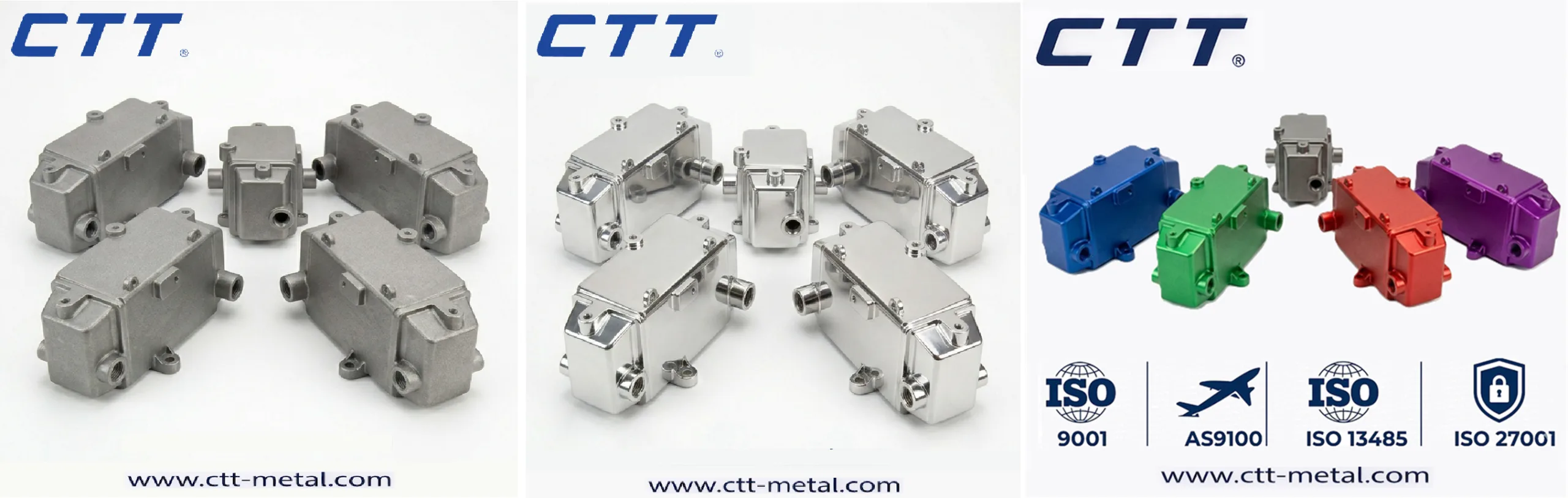
Achieving Premium Anodizing Die-Cast Aluminum through Vacuum Casting & CNC
The CTT Solution
By integrating Custom CNC Machining to remove unstable surface layers and utilizing advanced Vacuum Die Casting to minimize porosity, CTT delivers Anodizing Die-Cast Aluminum components that meet both aesthetic and functional excellence.
Precision Anodizing Die-Cast Aluminum: Trusted by Global Leaders in Optical & Aerospace
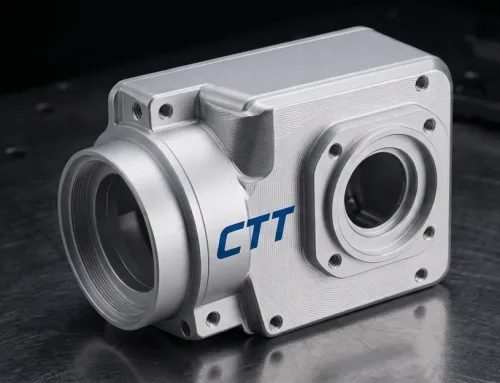
CTT’s premium aluminum die casting products are widely utilized in optical lenses, aerospace components, electronics, and high-end outdoor equipment. Renowned for our consistent manufacturing quality and unwavering reliability in Anodizing Die-Cast Aluminum, we have earned the long-term trust and recognition of global clients.